Loading...
ERP for Textile
Loom-to-Ledger ERP Software for Textile Manufacturing & Export
Running a textile business today isn’t easy. From spinning and weaving to garment finishing, you’re juggling countless moving parts. Without the right tools, it feels like chaos—late orders, inventory mistakes, and rising costs. That’s where ERP for textile industry comes in.
Illustrative screens, sample data.
Companies we have delivered for





Why Infintrix
Why Choose Infintrix ERP for Textile Industry?
When you’re in textiles, a generic ERP software won’t cut it. You need a system that understands dye lots, fabric rolls, seasonal demand, and the complexity of garment ERP workflows. That’s why Infintrix ERP is built as an industry-specific textile ERP solution.
The platform isn’t only about automation. It’s about helping textile companies reduce waste, improve fabric quality, and make decisions based on real-time data. Whether you’re managing a weaving mill or running an apparel ERP setup, Infintrix adapts to your business scale.
Industry-Specific Solutions
Unlike standard ERP software, textile ERP includes features like fabric testing, dye tracking, and production planning ERP tailored for garment manufacturers.
Scalable and Flexible
By automating purchase orders, batch scheduling, and order tracking, ERP frees up your team to focus on creating better fabrics and clothing.
Real-Time Visibility
With dashboards and reporting tools, managers gain real-time insights into supply chain costs, inventory, and garment ERP performance.
Benefits
Benefits of ERP Software for Textile Manufacturing Industry
Discover how the best ERP for textile manufacturing transforms operations, enhances efficiency, and drives profitability.
Production Optimization
ERP for textile improves machine efficiency by reducing downtime, optimizing weaving and spinning schedules, and flagging inefficiencies.
Cost Control
With ERP software, managers monitor material use, set accurate budgets, and reduce overspending—key for garment ERP success.
Improved Supply Chain
ERP in supply chain management strengthens vendor collaboration, prevents stock-outs, and keeps deliveries on time.
Data-Driven Decisions
Analytics and dashboards let apparel ERP users forecast demand, track costs, and make smarter calls.
Regulatory Compliance
ERP software helps textile firms stay compliant with U.S. labor, safety, and environmental rules without extra headaches.
Enhanced Productivity
Automation reduces repetitive tasks, helping staff work on innovation instead of paperwork.
In practice
How ERP Enhances Textile Manufacturing Operations
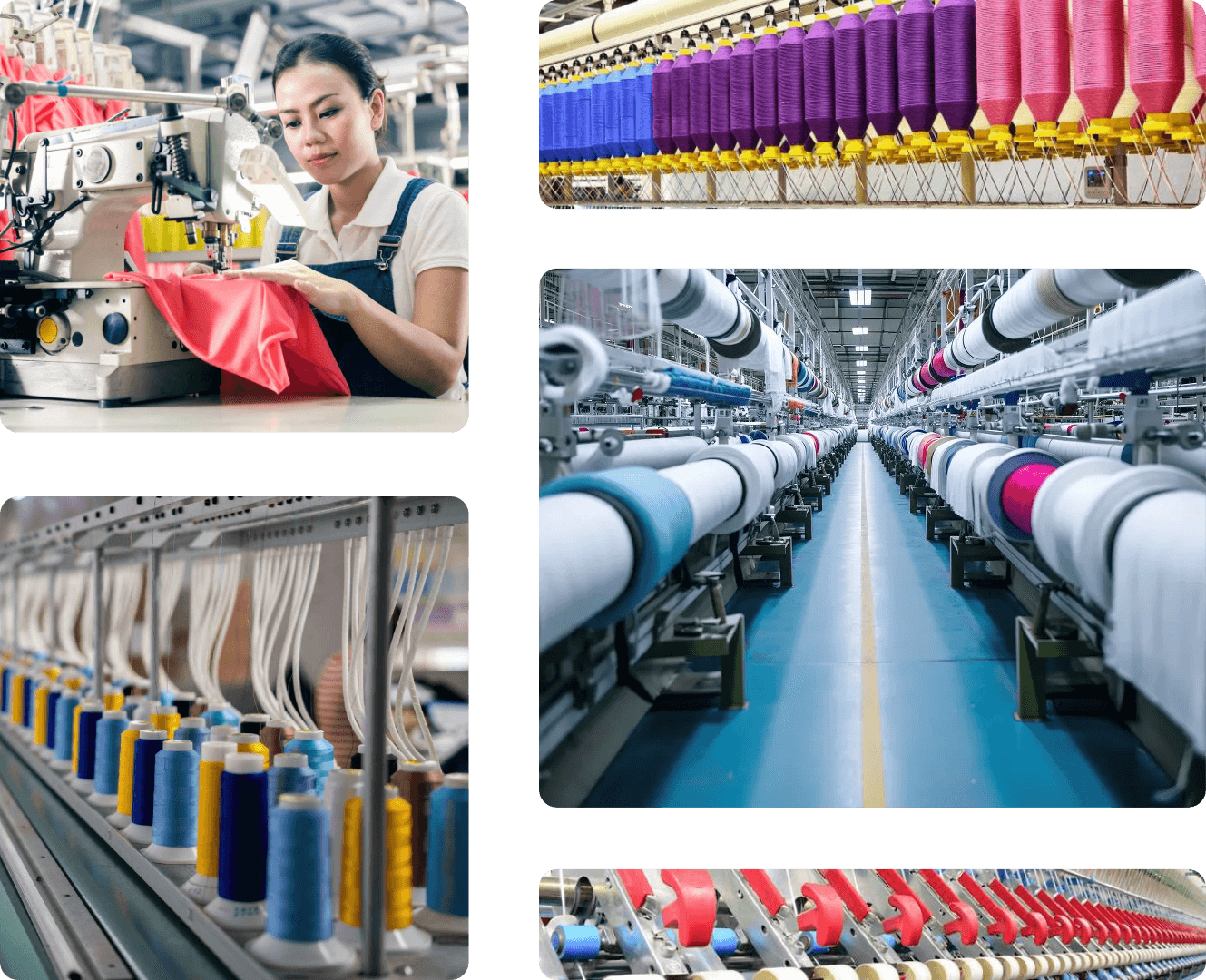
A garment ERP software streamlines textile operations from yarn to final shipment. It connects departments, minimizes delays, and gives managers a 360° view of production, making ERP solutions for manufacturers effective in today’s fast-moving textile sector.
- Production Tracking
- Real-time monitoring from spinning, weaving, dyeing, and finishing processes.
- Inventory Accuracy
- Track fabrics, dyes, and raw materials down to the lot for precise inventory control.
- Workforce Efficiency
- Align shifts, payroll, and HRM schedules to maximize workforce productivity.
- Cost Management
- Cut waste, optimize resource use, and boost overall profit margins.
- Quality Assurance
- Automate checks to maintain consistent textile ERP standards and reduce defects.
Capabilities
Key Features of Our ERP Software for Textile Industry
Explore the essential features of the best ERP for textile manufacturing, designed to optimize every aspect of your business operations.
Real-time Production Monitoring
Track weaving, spinning, and finishing processes instantly to spot delays and optimize efficiency.
Fabric Quality Testing Tools
Maintain consistency by recording test results for shrinkage, color fastness, and tensile strength.
Automated Inventory Management
Reduce stockouts and overstock by tracking yarn, fabrics, and dyes with automated updates.
Supplier and Vendor Management
Streamline procurement by monitoring vendor performance, pricing, and delivery timelines.
Batch and Dye Lot Tracking
Easily trace materials and dye batches to maintain quality control and meet compliance standards.
Multi-level Bill of Materials (BOM)
Simplify complex textile production with structured BOMs that handle multiple components and variations.
Advanced Reporting and Analytics
Gain actionable insights with real-time analytics and customizable reports for faster decisions.
Finance and Accounting Integration
Manage payroll, expenses, and invoices seamlessly within your textile ERP system.
Order and Sales Management
Track customer orders, manage delivery schedules, and improve communication with clients.
Workforce and Payroll Tracking (HRM)
Schedule shifts, monitor attendance, and handle payroll in one integrated module.
Cloud ERP Access for Flexibility
Work from anywhere with secure, web-based access to your ERP data.
Mobile-Friendly Dashboards
Stay updated on production, inventory, and sales using smartphone or tablet dashboards.
Modules
ERP Modules Tailored for Textile Industry
Our ERP comes with ready-to-use, integrable modules designed specifically for the textile manufacturing industry. Customizing the system for your business is easier than ever!
- Production Planning
- Quality Control
- Supply Chain Management
- Human Resources (HRM)
- Finance & Accounting
- Sales & Distribution
- Procurement Management
- CRM (Customer Relationship Management)
- Reporting & Analytics
- Inventory Management
Common challenges
Challenges Faced by Textile Manufacturers
Discover how ERP addresses the unique challenges faced by the textile industry, from production inefficiencies to inventory management.
Production Inefficiencies
How we address it: Delays in weaving or finishing can derail delivery schedules. ERP for textile tracking helps optimize production and reduce downtime.
Inventory Oversight
How we address it: Without inventory ERP for textiles, mills risk stockouts or overbuying. ERP enables real-time tracking of raw materials and finished goods.
Quality Control
How we address it: Maintaining fabric consistency is tough. ERP automates quality checks across dyeing, weaving, and finishing stages.
Supply Chain Disruptions
How we address it: Vendor delays and logistics issues hurt deliveries. ERP in supply chain management improves vendor collaboration and procurement flow.
Scalability
How we address it: As textile businesses grow, ERP solutions for manufacturers support multi-site operations and expansion.
Data Security
How we address it: Cloud ERP safeguards sensitive financial and production data with secure encryption and access controls.
Deployment
Cloud Deployment for Textile ERP
Today’s manufacturers can’t afford to be tied to one location. That’s why cloud ERP for textile companies is growing fast. It cuts costs, improves data security, and supports remote access.

- Easy Remote Access
- Manage textile ERP operations anywhere. Access real-time data from any device with an internet connection.
- Lower Costs
- No need for on-site IT servers.Reduce upfront costs with subscription-based pricing.
- Better Security
- Cloud ERP protects sensitive garment ERP data.Regular backups and advanced security measures ensure data integrity.
FAQ
Frequently asked questions
Straight answers to what clients ask us before they start.
What is ERP for textile industry?
It’s specialized ERP software that manages production planning, inventory management, supply chain, finance, and compliance for textile companies.
How does ERP help reduce textile manufacturing costs?
By cutting waste, streamlining operations, and improving fabric utilization.
Can ERP support small textile businesses in the USA?
Yes, textile ERP systems scale with business size, supporting SMEs and large manufacturers.
Is cloud ERP better than on-premise for textile firms?
For most, yes. Cloud ERP offers flexibility, lower costs, and better security.
How long does ERP implementation take?
Typically 3–6 months, depending on company size and complexity.
Does ERP improve quality control in textile production?
Absolutely. ERP automates checks in spinning, weaving, dyeing, and garment finishing.
Can ERP integrate with existing textile machinery?
Yes, many ERP systems offer integration with production equipment for real-time data.
What are the key features of textile ERP software?
Production planning, inventory management, quality control, supply chain management, and financials.